
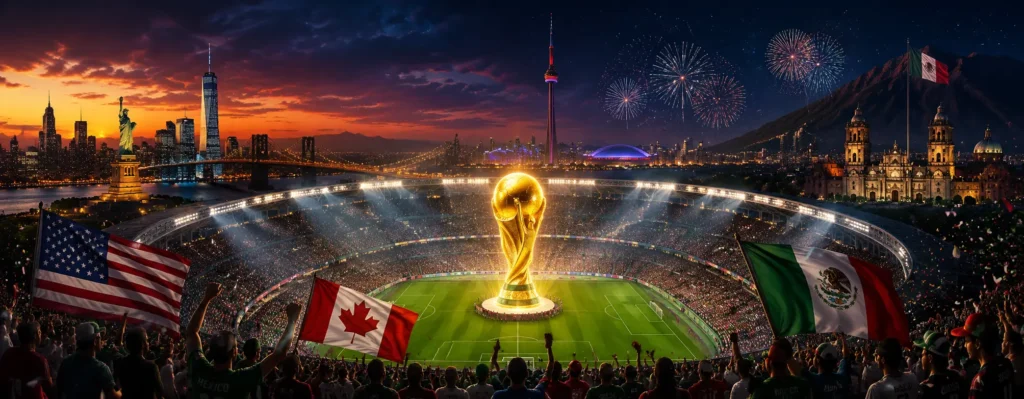
The FIFA World Cup has always been a global spectacle, drawing billions of viewers and sparking conversations across continents every four years. However, the 2026 edition stands apart, bringing unprecedented changes that are reshaping the tournament’s future. The excitement isn’t just about football, but this time it’s about history being made.
From a record-breaking number of teams and matches to three host countries joining forces for the first time, FIFA 2026 is shaping up to be the biggest sporting event the world has ever seen. Even people who don’t usually follow football are curious about what makes this edition so special.
So, what is all the buzz about? Let’s understand it in this blog.
Breaking Down the FIFA World Cup 2026
Before driving into the details, here’s a quick overview:
| Host Countries: | United States, Canada, and Mexico |
| Tournament Dates: | June 11 to July 19, 2026 |
| Teams Participating: | 48 (up from 32) |
| Total Matches: | 104 |
| Host Cities: | 16 cities across North America |
| Final Venue: | MetLife Stadium, New Jersey |
These numbers alone make FIFA 2026 the largest World Cup in the tournament’s history.
A Bigger World Cup Than Ever Before
The biggest talking point surrounding FIFA 2026 is the tournament expansion.
For decades, the FIFA World Cup featured 32 national teams. Starting in 2026, that number increases to 48 teams, creating more opportunities for countries to qualify and compete on football’s biggest stage.
This expansion means:
- More nations represented
- More matches for fans to enjoy
- Greater global participation
- More opportunities for underdog stories
Football fans love surprises, and World Cups often create unforgettable moments when smaller nations challenge traditional powerhouses. With 48 teams participating, the chances of witnessing such moments increase significantly.
Three Countries, One World Cup
Another reason FIFA 2026 is generating so much excitement is its unique hosting arrangement.
For the first time in history, three countries will co-host the tournament:
United States
The United States will host the majority of the matches and several of the tournament’s biggest events.
Canada
Canada will welcome World Cup matches to its passionate football communities and modern stadiums.
Mexico
Mexico will make history by becoming the first nation to host matches in three different FIFA World Cups.
This tri-nation hosting model transforms the tournament into a true North American celebration and creates an incredible travel experience for visiting fans.
More Matches, More Drama
With 48 teams participating, FIFA has expanded the tournament format.
The competition will now feature:
- 12 groups of four teams
- The top two teams from each group advancing
- The right best third-placed teams also qualifying
- A larger knockout stage
The result? A total of 104 matches, compared to just 64 in previous tournaments.
For football lovers, that’s 40 extra matches filled with goals, rivalries, celebrations, heartbreaks and surprises.
Could This Be the Final World Cup for Football Legends?
One of the most emotional storylines surrounding FIFA 2026 revolves around some of football’s biggest icons.
Fans around the world are wondering whether this tournament could be the final World Cup appearance for players who have defined an era.
The spotlight naturally falls on:
- Lionel Messi
- Cristiano Ronaldo
Both legends have already achieved nearly everything possible in football. If they participate in 2026, millions of fans will be watching closely, knowing it may be their last appearance on the world’s biggest football stage.
At the same time, a new generation of stars is ready to take over.
Young talents such as Kylian Mbappé, Jude Bellingham, and Lamine Yamal are expected to be among the tournament’s biggest attractions.
In many ways, FIFA 2026 could represent a changing of the guard in world football.
More Countries Will Get Their Chance
One of FIFA’s main goals behind expanding the tournament was to make football more inclusive.
Historically, qualifying for the World Cup has been extremely difficult, especially for nations outside Europe and South America.
The expanded format gives more countries from:
- Asia
- Africa
- North America
- Oceania
An opportunity to participate. This means fans may witness first-time appearances, historic qualification campaigns, and entirely new football stories. For emerging football nations, simply reaching the World Cup can inspire a generation of young players.
The Economic Impact Is Massive
The FIFA World Cup is not just a sporting event – it’s a global business and tourism powerhouse.
Millions of football fans and tourists are anticipated to journey across North America to experience the tournament firsthand.
The economic impact includes:
- Tourism revenue
- Hotel bookings
- Restaurant spending
- Transportation services
- Merchandise sales
- Sponsorship deals
- Media rights
Host cities are already preparing for a surge of international visitors, making FIFA 2026 one of the largest economic events of the decade.
Not Everyone Agrees With the Changes
While excitement is high, the expanded format has also sparked debate.
Critics argue that:
- 104 matches may feel excessive
- Scheduling could become more complicated
- The gap in quality between teams may increase
- The tournament could become more difficult for casual fans to follow
Supporters, however, believe the benefits outweigh the concerns.
They argue that football’s biggest event should reflect the sport’s global popularity and provide more nations with an opportunity to compete.
Only time will tell which side is right.
Why FIFA 2026 Matters Beyond Football
The World Cup has never been solely about winning matches or lifting trophies; it has always represented something much bigger.
It brings together people from different countries, cultures, languages and backgrounds. For one month, billions of people share the same conversations, celebrations and emotions.
FIFA 2026 takes that idea to an entirely new level.
With three host countries, 48 competing nations and fans arriving from every corner of the globe, the tournament is expected to become one of the largest cultural events ever organized.
In Short,
The buzz surrounding FIFA World Cup 2026 isn’t just hype – it’s history in the making.
The tournament will be larger, longer and more global than any World Cup before it. It will introduce new nations to the spotlight, potentially mark the final World Cup appearances of legendary players and showcase football on an unprecedented scale.
Whether you’re a lifelong football fan or someone who only tunes in every four years, FIFA 2026 promises something for everyone.
One thing is certain: when the first whistle blows in June 2026, the entire world will be watching.