
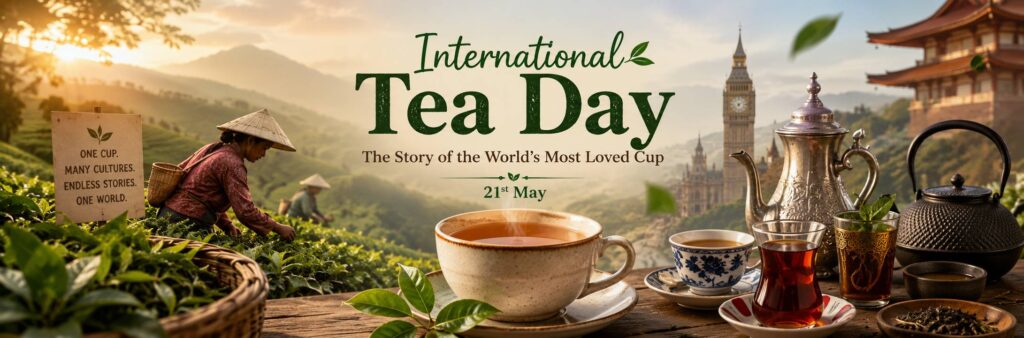
There’s something almost magical about tea.
One cup can calm anxiety, fix awkward conversations, fuel late-night work sessions, warm winter mornings, and somehow make heartbreak feel slightly less dramatic.
Tea is not just a drink. It’s a ritual. A personality trait. A cultural emotion.
From roadside chai stalls in India to elegant afternoon tea tables in England, from Japanese tea ceremonies to Moroccan mint tea traditions, tea has quietly connected people across centuries, borders and lifestyles.
And that’s exactly why the world celebrates International Tea Day every year on 21st May – to honour not only the beverage itself, but also the millions of people, cultures, farmers and stories behind every cup.
So grab your favorite tea, because this story goes way beyond milk, sugar and tea leaves.
What is International Tea Day?
International Tea Day is a global celebration dedicated to tea and the communities connected to it.
The day highlights:
- Tea’s cultural importance
- The history of tea across civilizations
- Sustainable tea production
- The livelihood of tea workers and farmers
- The growing global love for tea
The United Nations officially recognised International Tea Day in 2019 and the world started observing it globally from 2020 onwards.
But the love story between humans and tea? That started thousands of years ago!
The Accidental Discovery That Changed the World
Like many legendary discoveries, tea entered human history completely by accident.
According to ancient Chinese folklore, tea was discovered in 2737 BCE by Chinese Emperor Shennong. The story says the emperor was boiling water under a tree when a few leaves accidentally fell into the pot. Curious about the aroma, he tasted the infused water and tea was born.
True or not, the story became one of the most famous legends in food history.
Imagine inventing the world’s favorite comfort drink because some leaves fell into hot water. That’s iconic!
Tea Was Once More Valuable Than Gold
Hard to believe now, but tea was once considered a luxury item reserved for royals, monks and wealthy traders.
In ancient China:
- Tea was used as medicine before it became a daily drink
- Special tea bricks were used as currency in some regions
- Tea drinking became a symbol of sophistication and status
As tea culture spread through Asia, countries began creating their own tea traditions.
Japan Turned Tea Into an Art Form
In Japan, tea became deeply spiritual.
The Japanese tea ceremony, known as Chanoyu, focuses on:
- Simplicity
- Respect
- Presence
- Mindfulness
Every movement during the ceremony has meaning. Even pouring tea becomes meditative.
Meanwhile, in India…
Tea became an emotion.
How Tea Became India’s Lifeline
India is now one of the largest tea producers and consumers in the world, but tea wasn’t originally native to most Indian households.
The British East India Company started large-scale tea plantations during colonial rule to compete with Chinese tea trade dominance.
Soon, tea plantations spread across regions like:
- Assam
- Darjeeling
- Nilgris
Initially, Indians didn’t consume much tea. But then came the genus twist.
Street vendors started adding:
- Milk
- Sugar
- Ginger
- Cardamom
- Masala spices
And just like that, chai became unstoppable.
Today, chai is practically India’s unofficial national beverage.
Morning chai. Train chai. Rain chai. Breakup chai. Office chai. Gossip chai. There’s tea for every mood.
Tea is the Second Most Consumed Drink in the world, right after water. Yes, tea beats coffee globally in overall consumption. That tiny leaf somehow conquered the planet!
How Britain Fell Deeply in Love With Tea
If India made tea emotional, Britain made it elegant.
Tea arrived in the United Kingdom during the 17th century and quickly became fashionable among the upper class. Then came the legendary “afternoon tea” culture.
Tiny sandwiches. Fancy teacups. Biscuits. Cake. Tiny spoons nobody actually knows how to hold properly.
The tradition became so popular that tea transformed into a major part of British identity.
The British once taxed tea so heavily that it indirectly contributed to one of history’s biggest political protests – the Boston Tea Party.
Imagine starting a revolution because tea became too expensive!
The Tea Bag Was Also Invented By Accident
In the early 1900s, American tea merchant Thomas Sullivan sent tea samples in small silk bags.
Customers mistakenly dipped the entire bag into hot water instead of opening it. And that happy accident gave birth to tea bags. Humanity truly thrives on confusion.
Different Countries, Different Tea Personalities
Tea changes dramatically depending on where you go.
India
Strong, milky, spicy chai.
China
Delicate green teas, oolong teas, and centuries-old tea rituals.
Morocco
Sweet mint tea served as a sign of hospitality.
Turkey
Dark black tea served in tulip-shaped glasses.
Thailand
Sweet iced tea with condensed milk.
England
England classic black tea with milk.
Tibet
Butter tea made with yak butter and salt.
Yes, salty tea exists. And surprisingly, many people love it.
Tea and Wellness: Why People Still Swear By It
For centuries, tea has been associated with relaxation and healing.
Different teas are linked to different benefits:
- Green tea → antioxidants
- Chamomile tea → relaxation
- Peppermint tea → digestion
- Ginger tea → soothing colds
- Black tea → energy and alertness
Of course, tea isn’t a miracle cure. But emotionally? A warm cup fixes more situations than people admit.
The Dark Side Behind the Tea Industry
International Tea Day is not only about celebration. It also raises awareness about the people who grow and harvest tea.
Tea production involves millions of workers worldwide, many of whom face challenges like:
- Low wages
- Tough working conditions
- Climate change impacts
- Lack of fair trade opportunities
The day encourages sustainable tea farming and better support for tea-growing communities. Because every comforting cup has human effort behind it.
Tea in Pop Culture
Tea has become more than a beverage online. It’s now internet slang too. “Spill the tea” means tell the gossip.
It’s true that no other drink owns both ancient spiritual ceremonies and celebrity gossip culture simultaneously. That range is impressive for sure.
Adding milk first or tea first was once considered a class debate.
Why Tea Feels So Personal
Coffee wakes people up. Tea sits the people.
Tea appears in:
- family conversations
- hostel memories
- heartbreaks
- exam nights
- office breaks
- mountain trips
- train journeys
- rainy evenings
Sometimes people don’t even want tea. They want the pause that comes with it. And maybe that’s why tea survived thousands of years without ever going out of style.
How People Celebrate International Tea Day
Around the world, people celebrate by:
- Trying different tea flavours
- Hosting tea tastings
- Supporting local tea brands
- Learning about tea cultures
- Visiting tea gardens
- Posting chai pictures online
- Having long conversations over tea
Which, honestly, sounds like a perfect day.
Final Sip
International Tea Day is not just about celebrating a drink.
It’s about celebrating:
- culture
- comfort
- connection
- history
- conversations
- workers
- traditions
Tea has travelled through empires, revolutions, monasteries, train stations, royal palaces, college canteens, and tiny roadside stalls.
And somehow, after thousands of years, it still manages to make ordinary moments feel softer.
So whether you love masala chai, green tea, iced tea, lemon tea, or overpriced café tea that somehow costs more than lunch – today is your excuse to pour another cup.
Because tea is never just tea.